Putting research at the centre of a retail platform.
A fast-growing retail tech startup (later acquired by Klarna) where I audited the product, kicked off user research, and built a UX strategy to support scale.
Connecting shoppers and stores.
Hero® connects online shoppers with retail store associates through chat, photos, videos and livestreams. The platform now powers many global retailers such as Nike, Adidas, Harvey Nichols and Three, and was acquired by Klarna in 2021.
As the company scaled, I was brought on board to audit the product and design process, kick off user research, and lay the foundations of a long-term UX strategy.
Scope of work
- UX strategy, tooling & process
- Product audit
- Stakeholder interviews
- User research
- Usability testing
- Information architecture
- Personas
- UX metrics & reporting
Context
Hero® was acquired by Klarna in 2021. The platform is made up of three products: a web plugin for shoppers, a mobile app for store associates, and a web-based analytics platform called "All Doors".
Product & Process Audit
I started with a deep dive into Hero's three-part platform: the shopper-facing Web Plugin, the store associate Mobile App, and the "All Doors" analytics dashboard used by retail partners.
The team walked me through their top-level product process, which allowed me to recommend immediate actions and map out a set of UX activities to address the company's biggest blind spots at the time.
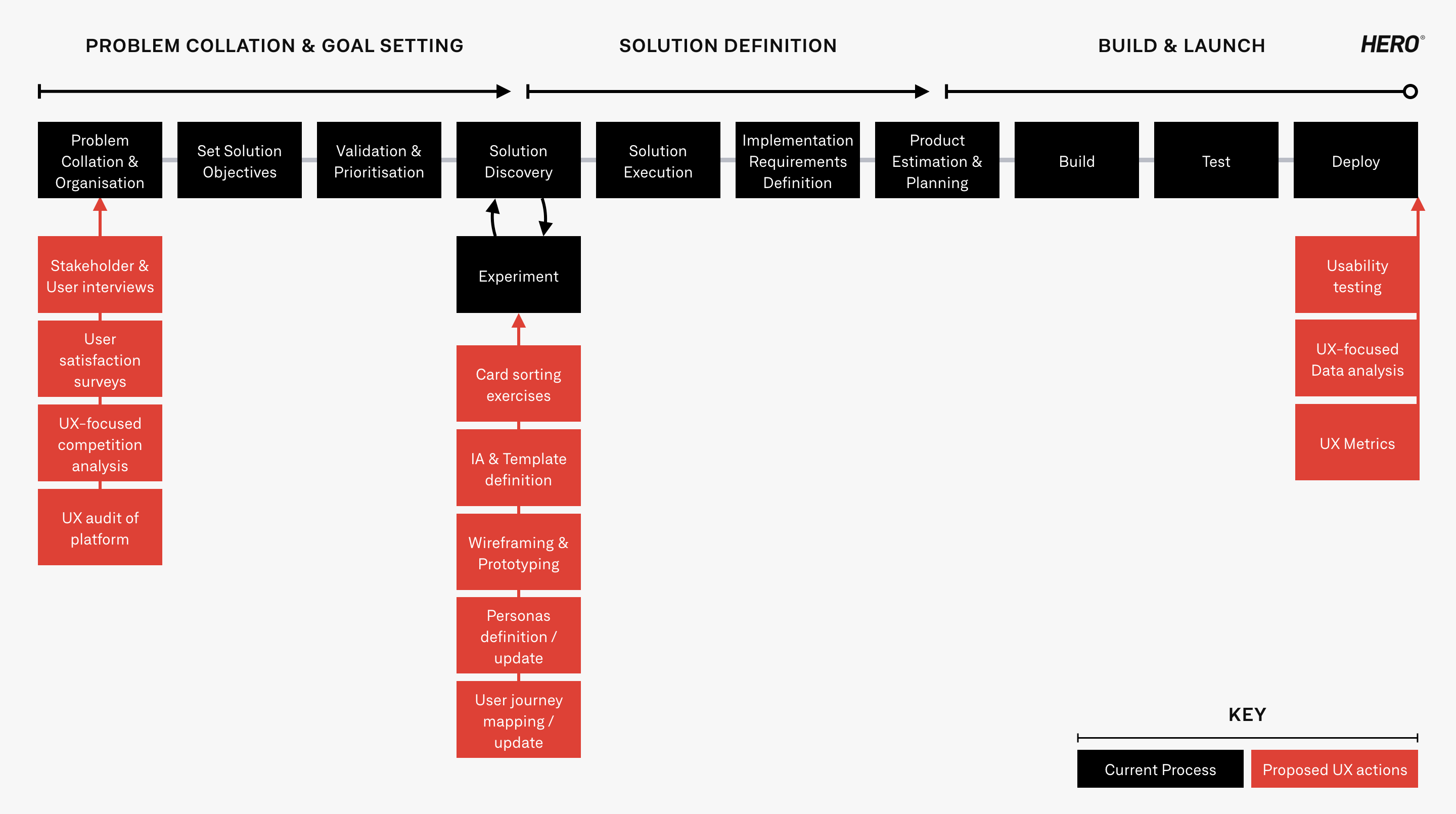
Exploration of potential UX activities, to be injected within Hero's existing process
Stakeholder Interviews
To get a clear picture of the company's vision, goals and internal assumptions about the product and its users, I organised, moderated and synthesised 12 stakeholder interviews across all levels of the company.
I identified 12 common themes and 4 clear contradictions across the board, surfacing the biggest UX gaps, setting clear research goals, and opening up a handful of new product concepts to explore.
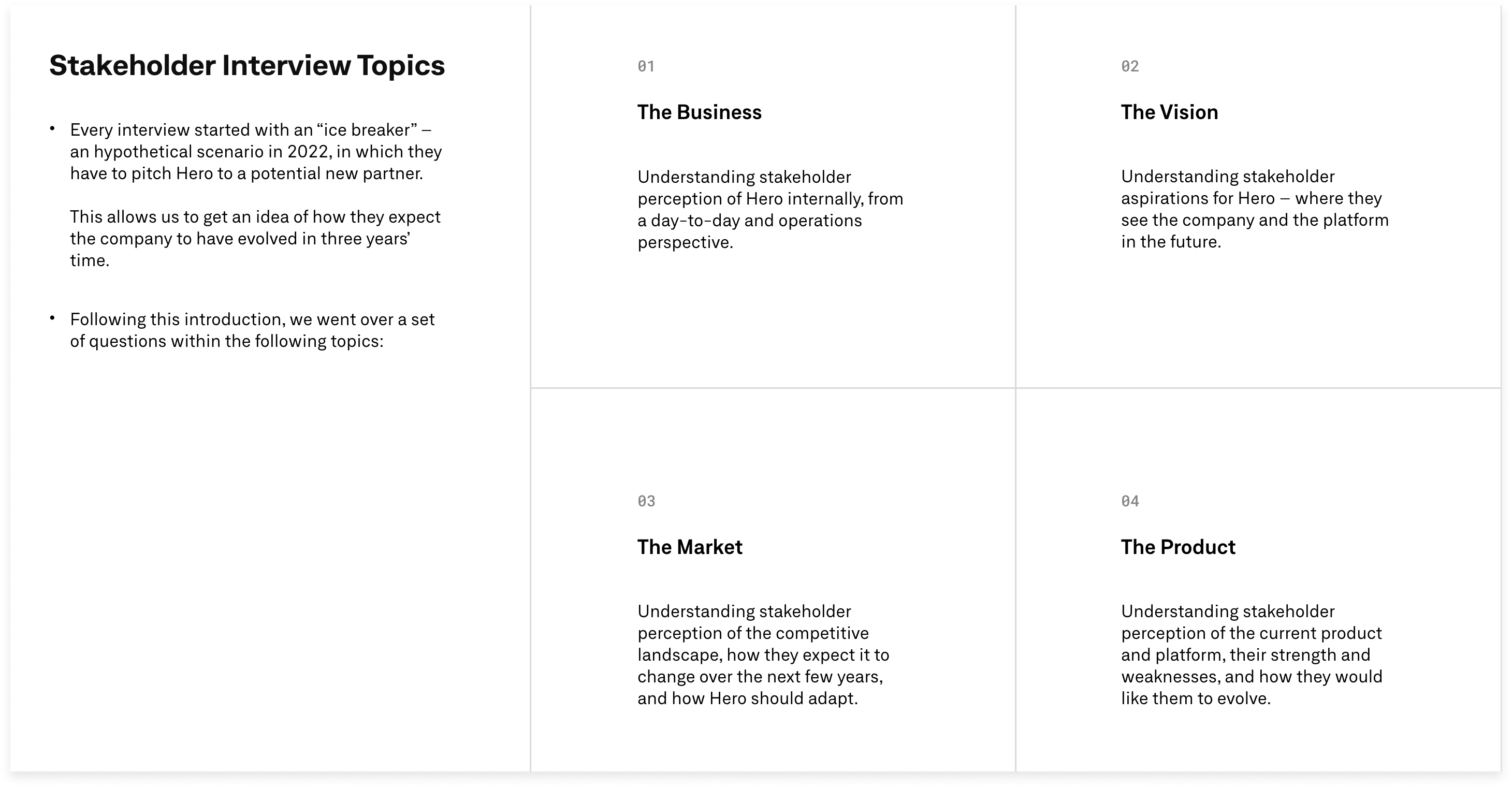
Slide extracted from company-wide report presentation
User Research
I kicked off multiple projects to increase the number of direct conversations with Hero's retail partners, introducing the concept of Client Advisory Board sessions (CABs) and strengthening the store visit process.
CABs pair a user interview with a usability testing session, tailored to the type of users we were talking to. I prepared, moderated, recorded and synthesised the first batch of CABs with 8 partner teams, alongside a handful of in-store research visits.
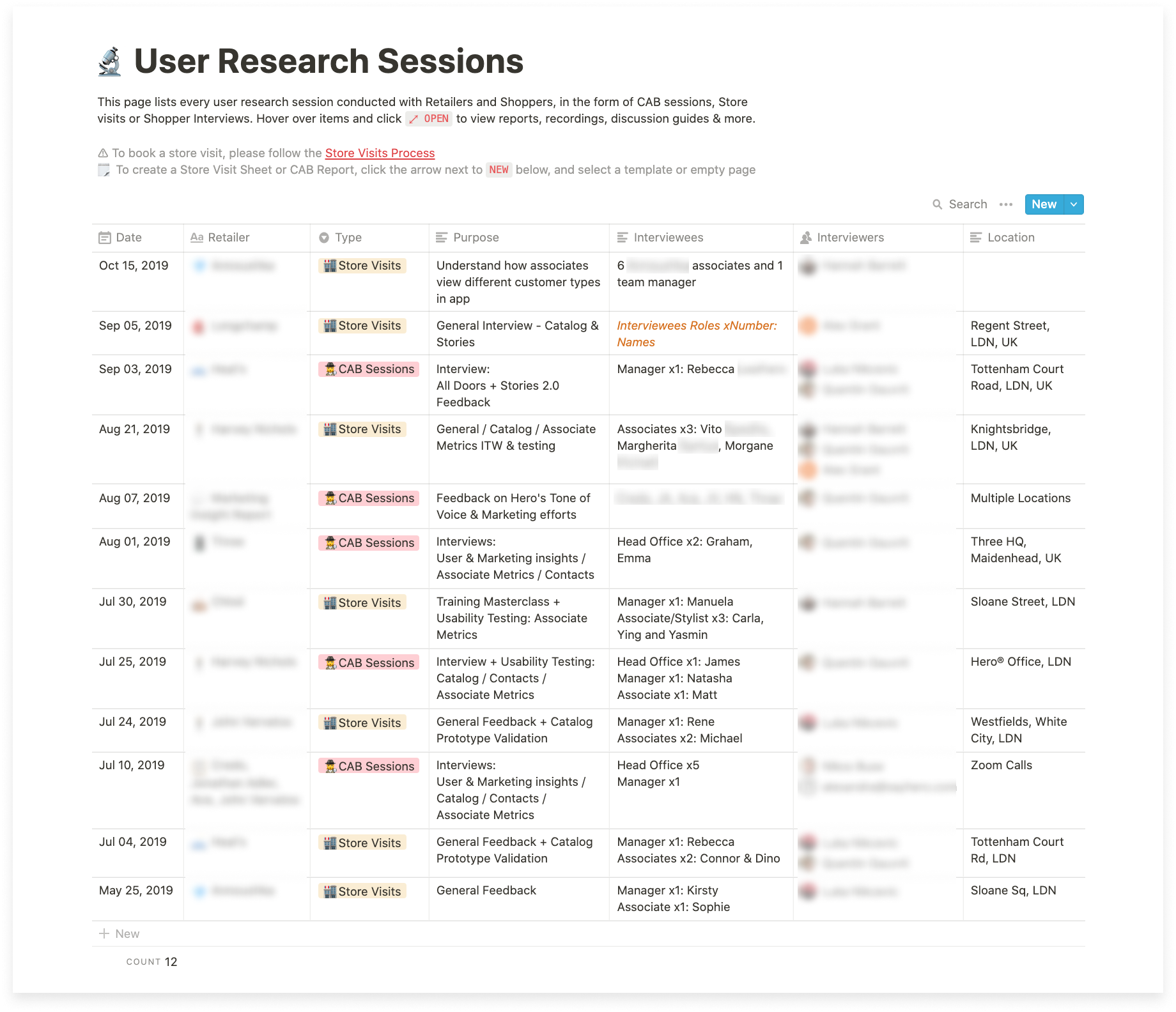
Live User Research repository, where all CABs and store visits were prepared and documented
Personas
To keep users at the heart of every product decision, I designed a set of prototype personas: six profiles for Hero's typical B2B "Partner" users, and two for its B2C "Shopper" users.
Each persona captured context, goals, behaviours and frustrations for its user type. While initially based on internal assumptions, they were updated continuously as new research findings came in.
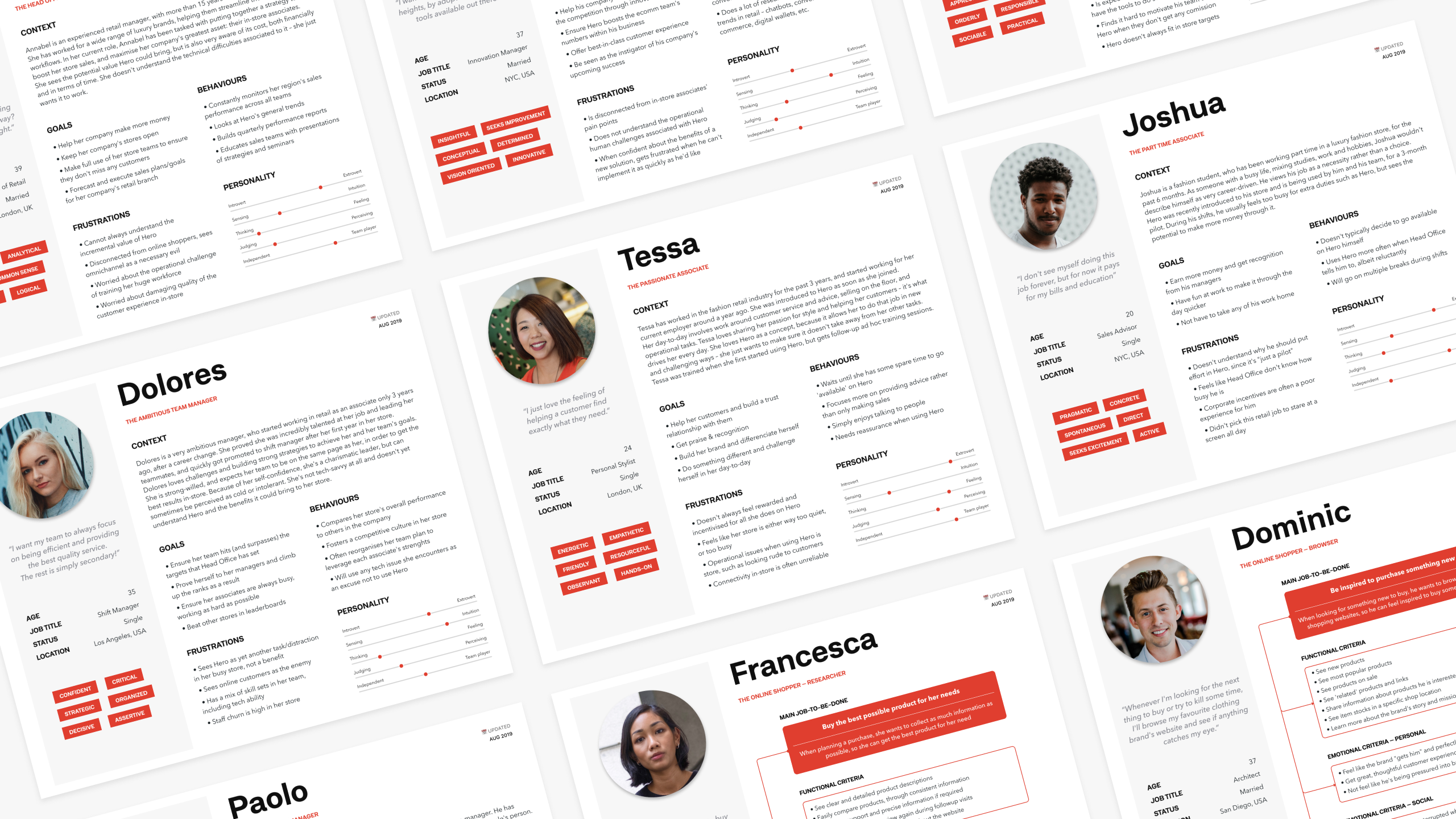
A set of prototype personas for Hero's Partner and Shopper users
Information Architecture
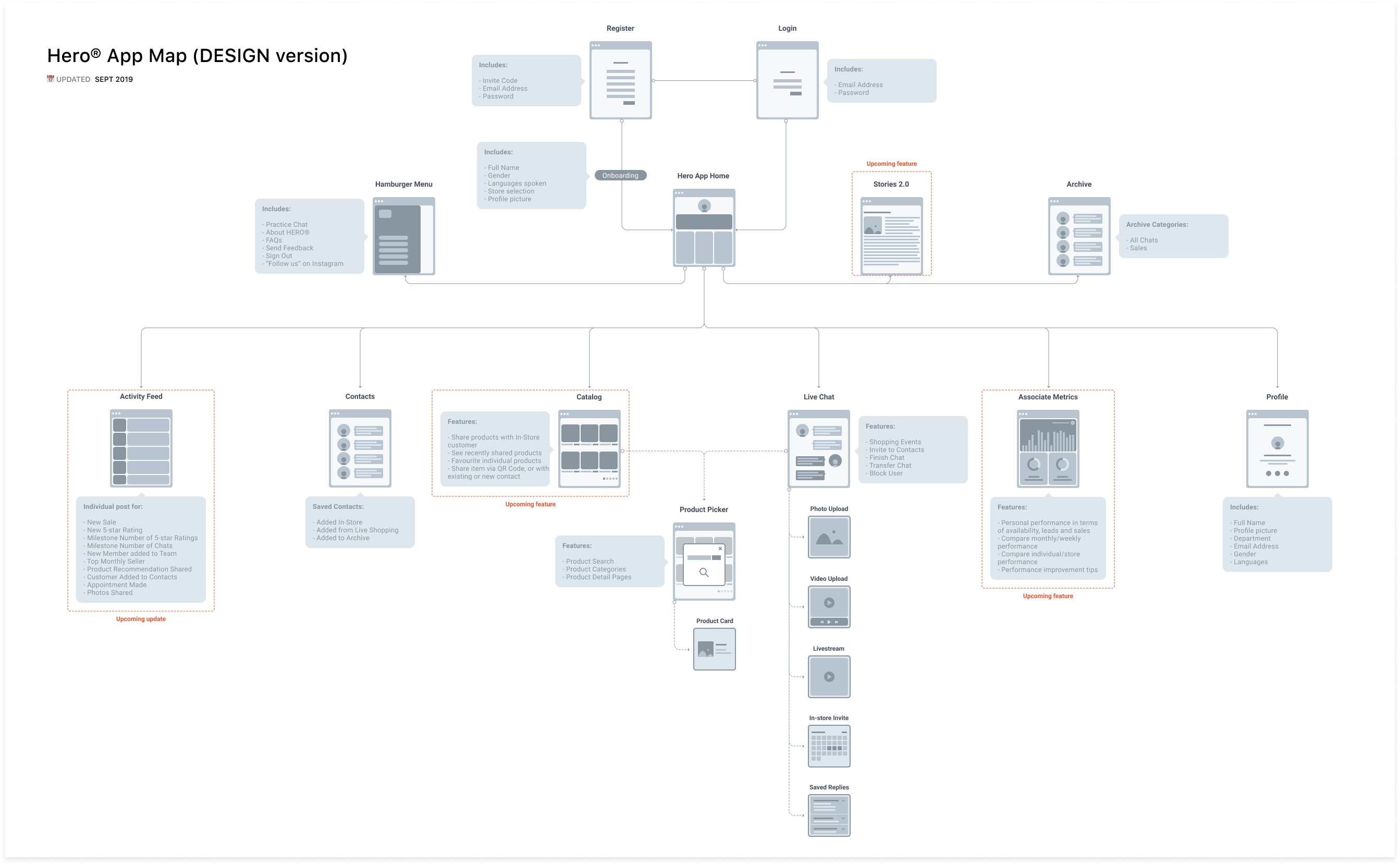
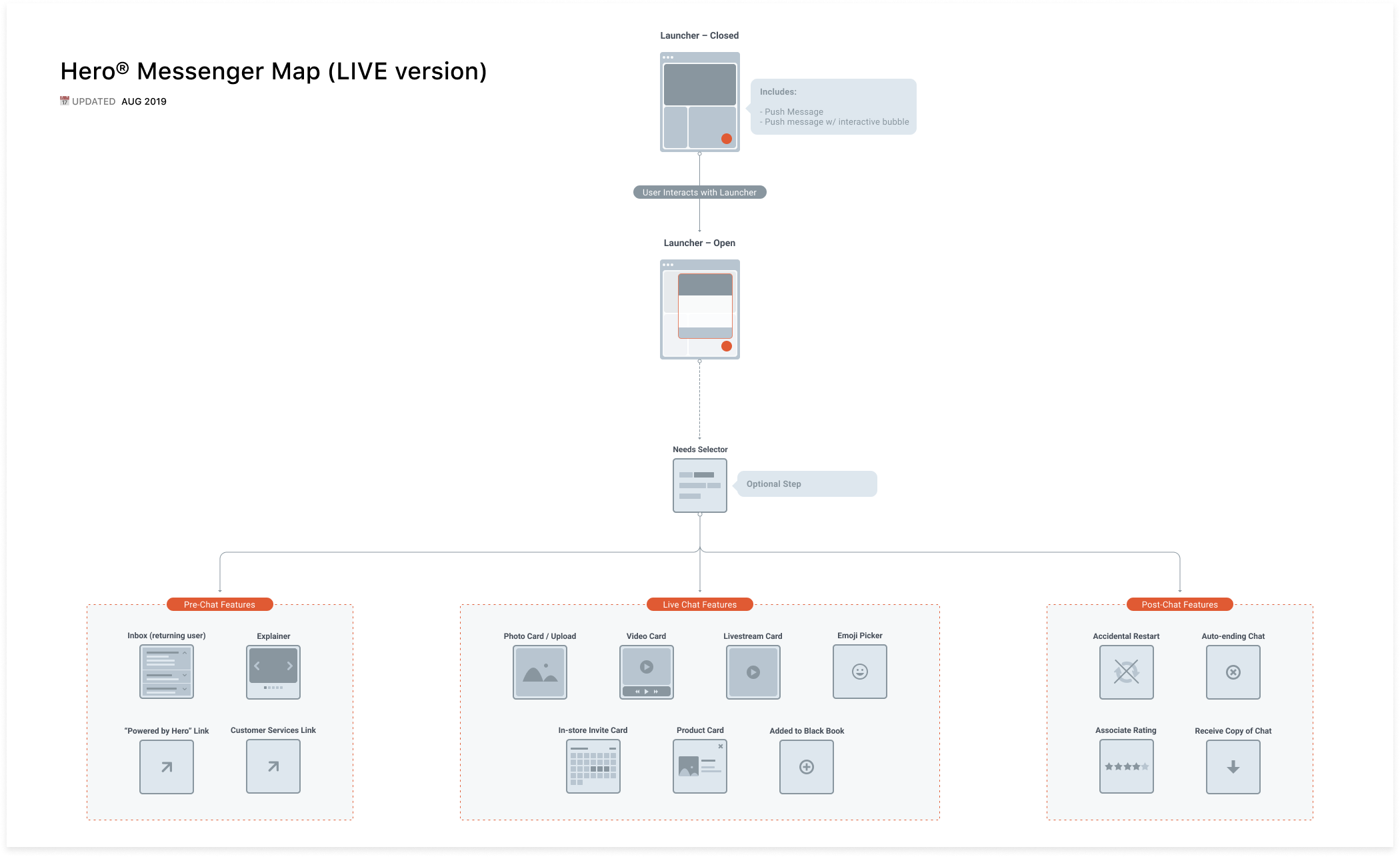
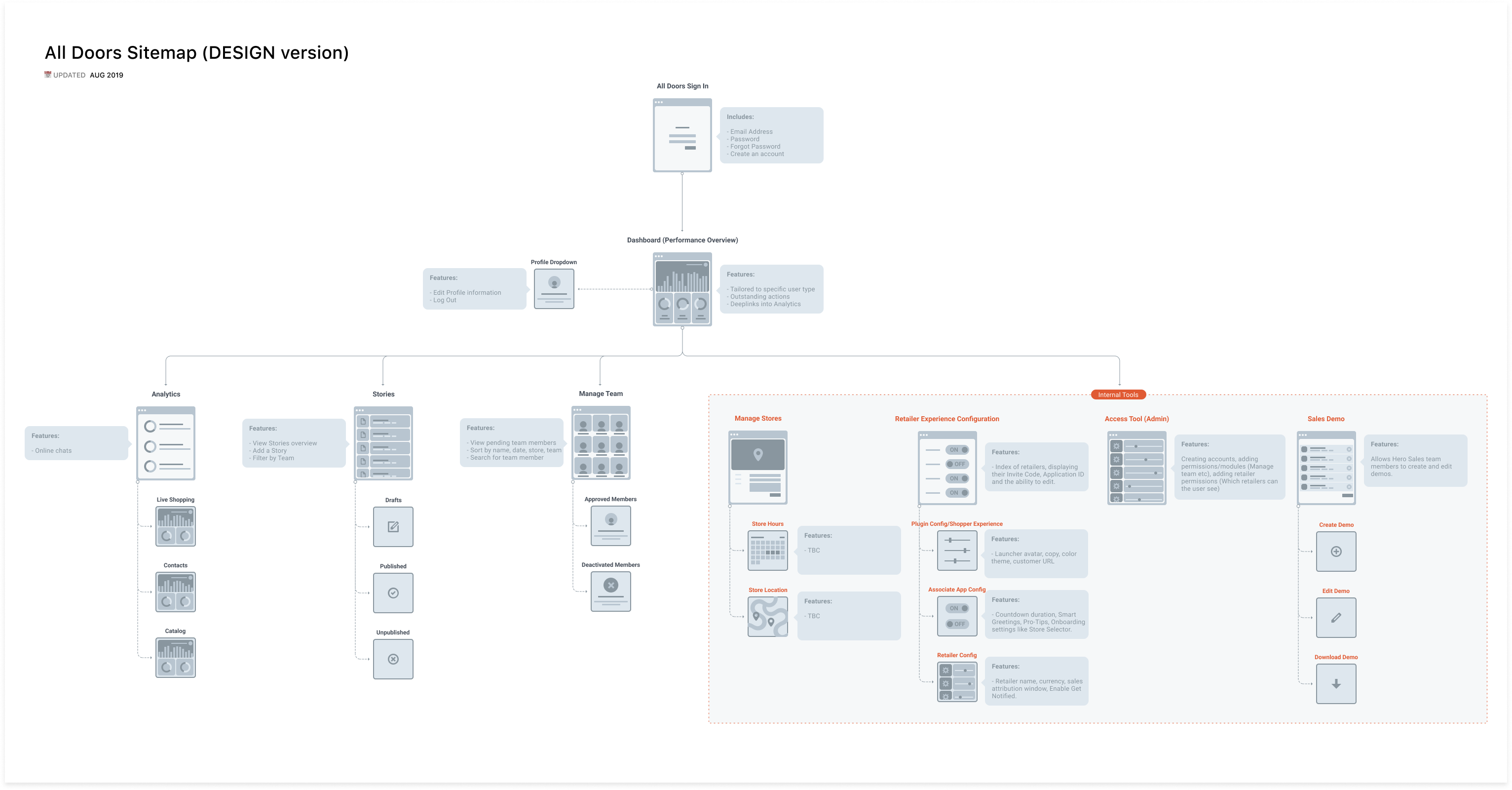
Site and app maps had existed in the past, but hadn't been maintained. The design team would occasionally add blocks to the experience without keeping a bird's eye view of the platform.
I designed individual maps for the Web Plugin, Mobile App and All Doors dashboard. Each map had two versions: a Live version reflecting the current product, and a Design version for upcoming features. All maps were assigned to designers and PMs to keep them continuously up to date.
UX Metrics Dashboard
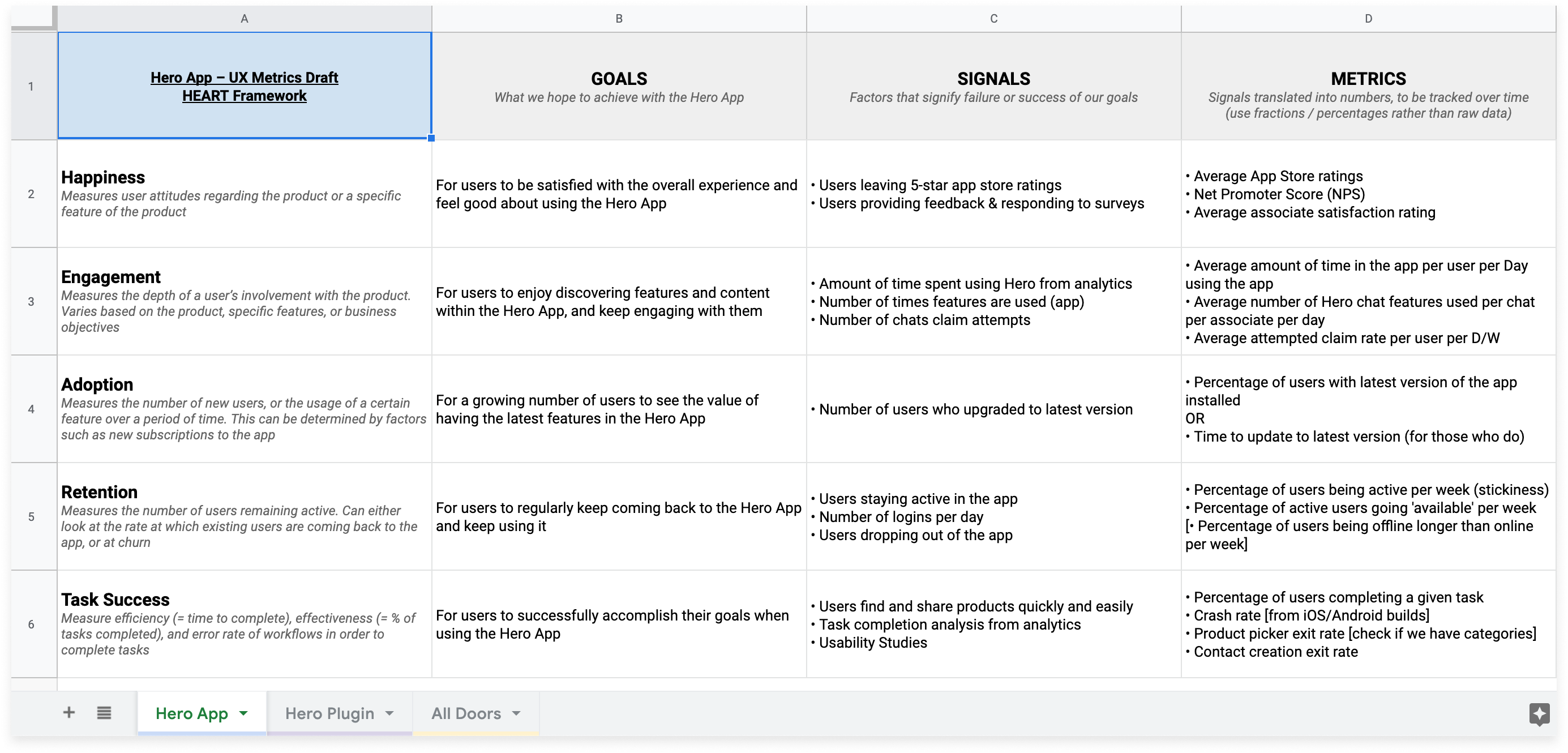
One of the key objectives of the UX strategy was to find an effective way to measure the overall quality of the platform's user experience over time.
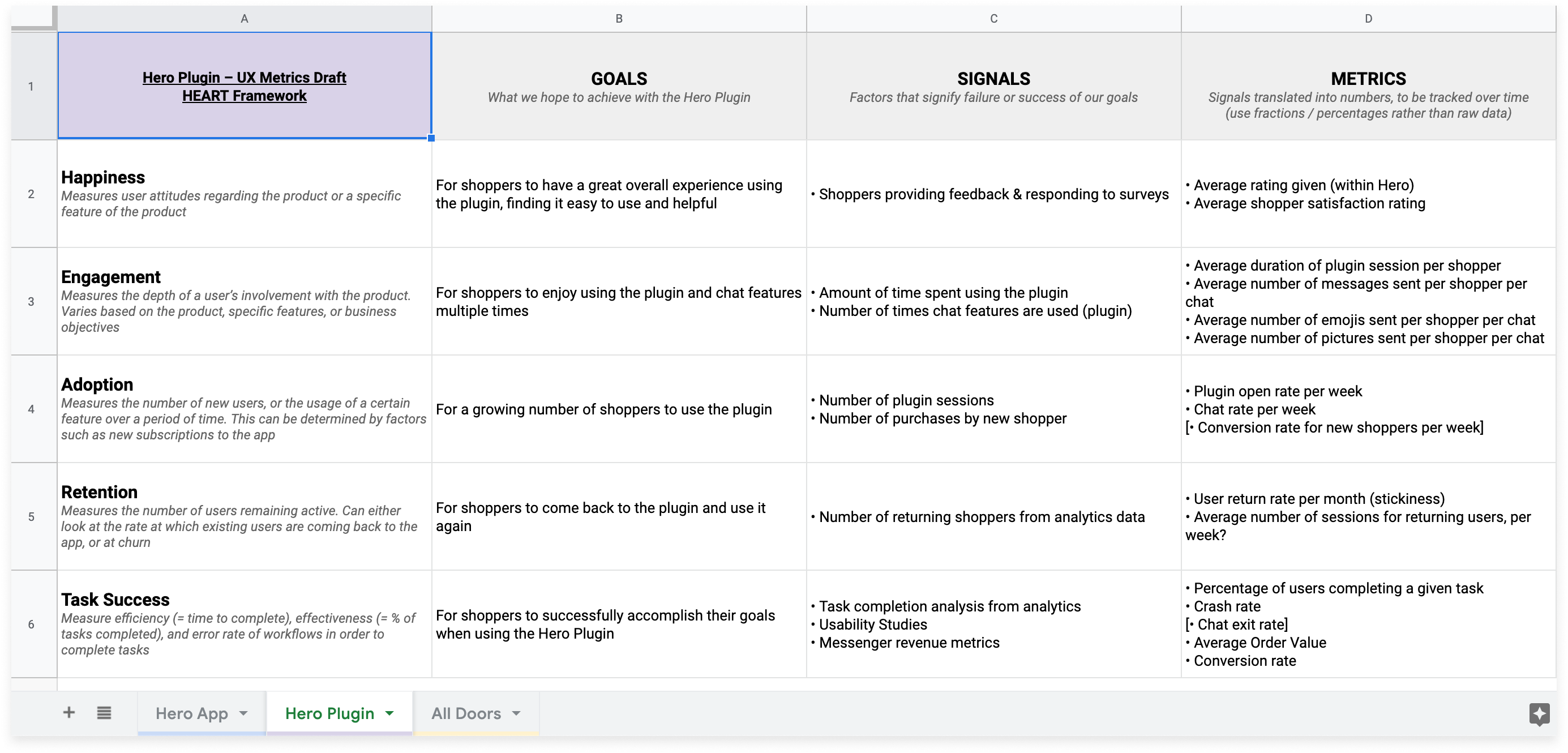
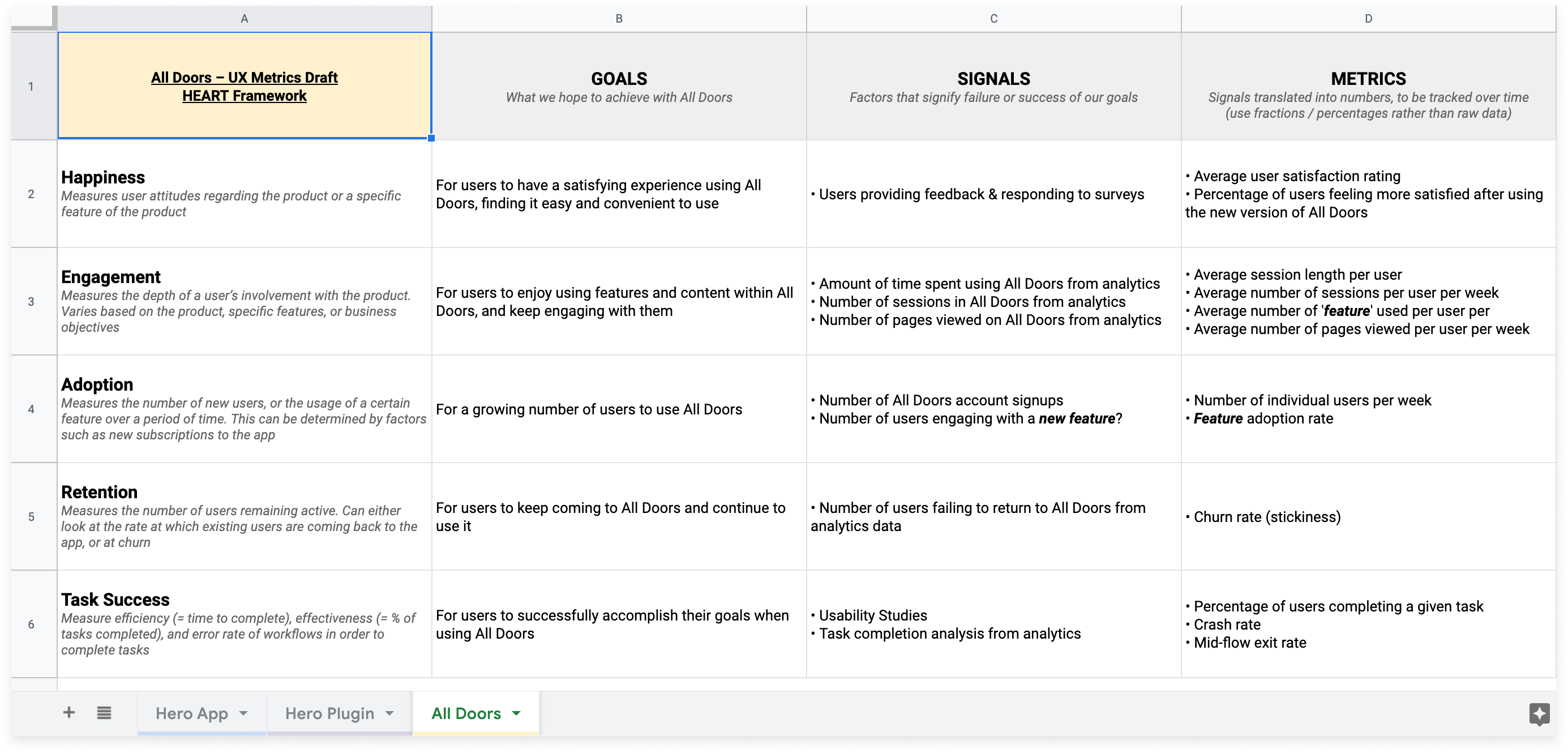
Using Google's HEART framework, I drafted UX metrics dashboards for the Hero App, Plugin and All Doors, outlining goals, signals and specific metrics for each of the five HEART categories: Happiness, Engagement, Adoption, Retention and Task Success.
Tooling & The UX Hub
Throughout the engagement I spent a lot of time searching for the right tools to streamline Hero's product design process, covering in-app feedback, usability analytics, usability testing, surveys, session recording, prototyping and research documentation.
As the Product team migrated its knowledge base to Notion, I created Hero's UX Hub: a single home for every UX document, report, process and research insight, shared company-wide and continuously updated.
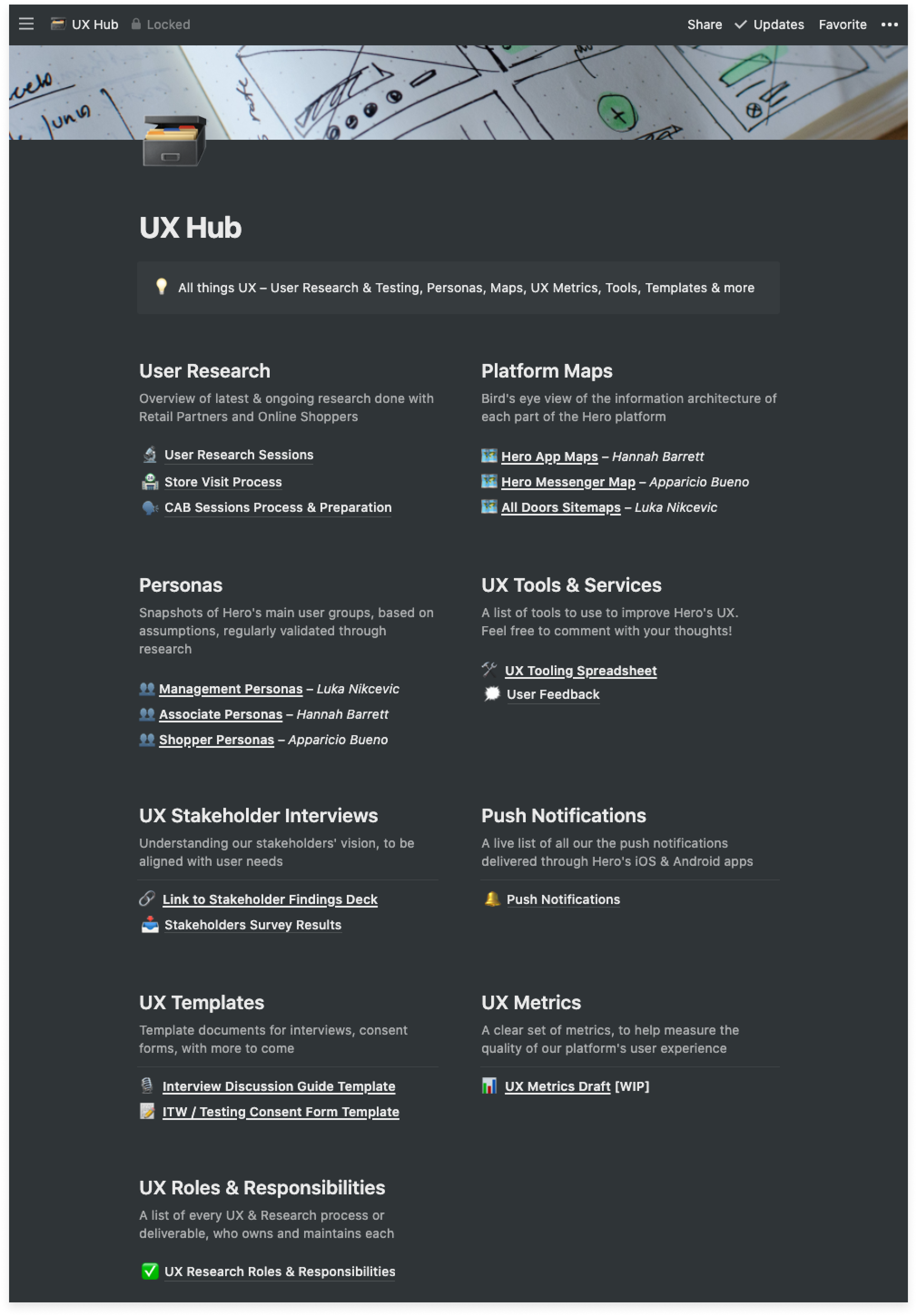
Hero's UX Hub hosts every document, report, process and any other UX-related content